
Our Office
-
710, A-Wing, Centrum Business Square, Road No. 16
-
Wagle Estate, Thane (West) 400604, Maharashtra.
Rapid. Robust. Real.
Why the freeze on Ready Reckoner rates could be the boost developers, buyers, and the wider economy needed
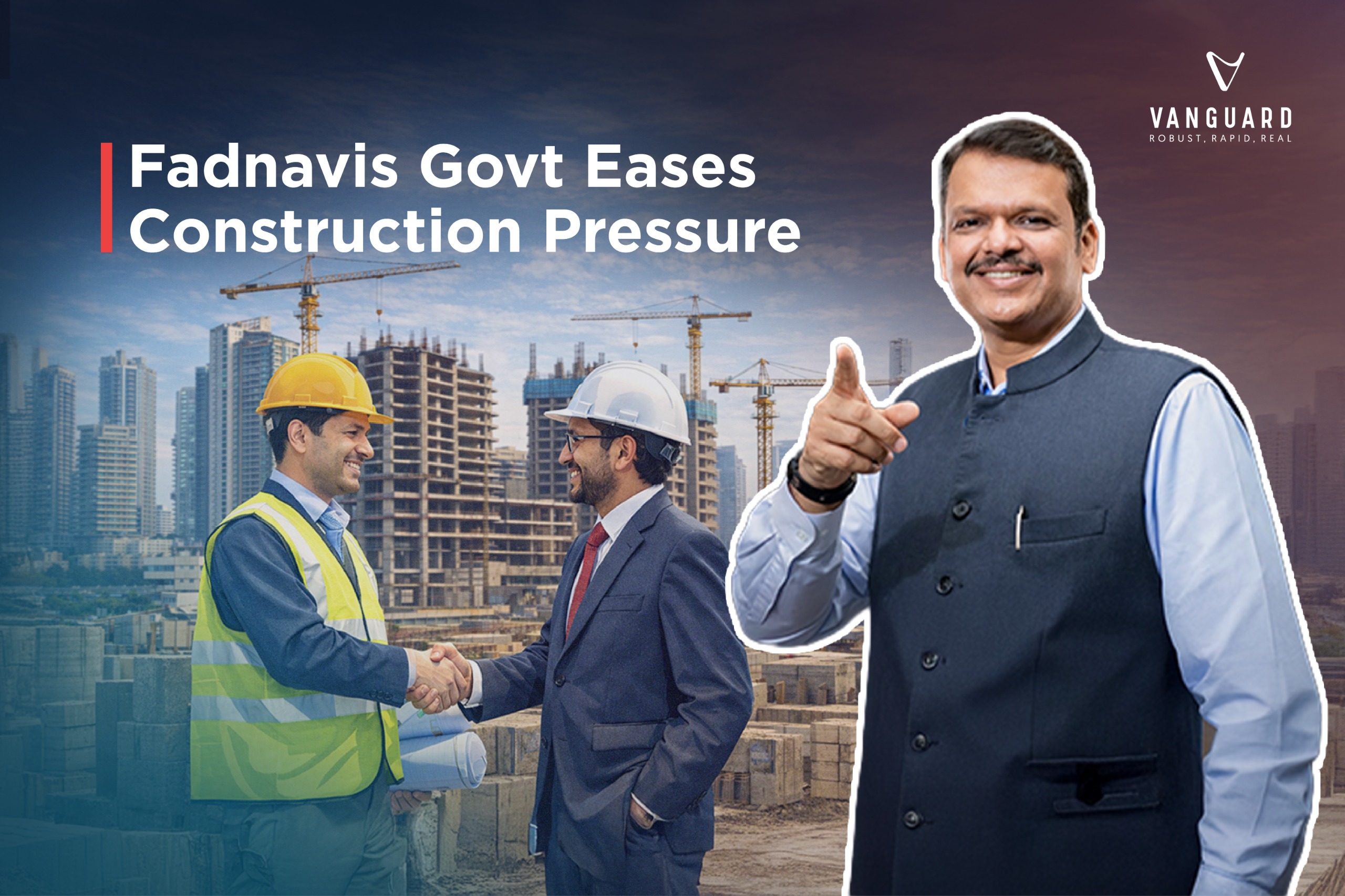
In a move that has brought visible relief to Maharashtra’s real estate and construction ecosystem, the state government has decided to keep Ready Reckoner rates unchanged for the financial year 2026–27. The rates applicable in 2025–26 will continue from April 1, 2026, without any hike — a decision taken against the backdrop of global uncertainty, rising cost pressures, and a slowdown in the construction sector.
For developers, this is more than a routine regulatory update. For homebuyers, it could mean a more stable path to ownership. And for the broader market, it sends a clear message: at a time when sentiment matters as much as numbers, the government has chosen stability over additional burden.
Revenue Minister Chandrashekhar Bawankule said the decision was taken on the instructions of Chief Minister Devendra Fadnavis, after considering requests and suggestions from CREDAI and document writers.
Ready Reckoner rates — also referred to as RR rates or Annual Statement of Rates — are the government’s benchmark property values used to calculate stamp duty and registration charges.
In simple terms, they act as the minimum official value at which a property transaction is assessed for taxation and registration purposes. Even when a buyer negotiates a market deal, the government valuation continues to influence the final cost structure attached to the purchase.
That is exactly why any upward revision in Ready Reckoner rates has a ripple effect. It does not only affect a property’s registration cost. In many cases, it also influences development economics, approval-linked costs, premium calculations, and the psychological affordability of the market.
When benchmark values rise, the burden is rarely limited to one line item. It often impacts the entire ecosystem — from land acquisition and project viability to end-user pricing and investor confidence.
This year’s decision carries particular importance because it comes at a sensitive moment for the sector.
News reporting around the announcement indicates that the government weighed the global situation, geopolitical uncertainty, and a domestic construction slowdown before arriving at a zero-hike position.
Some earlier reports had suggested that the state was considering a 3% to 10% increase in certain pockets, especially areas seeing infrastructure growth, but that proposal was ultimately shelved.
That reversal matters.
At a time when input costs remain elevated, financing conditions stay tight for many buyers, and developers are already balancing execution costs with demand sensitivity, a hike in RR rates would have made the market heavier.
Instead, by retaining last year’s rates, the government has chosen to avoid an additional pricing shock. It is a practical move that recognises the current mood of the market — cautious, value-conscious, and highly sensitive to affordability.
For homebuyers, especially in a price-aware market like Maharashtra, stability in Ready Reckoner rates is no small benefit.
A rise in RR rates typically increases stamp duty-linked transaction costs and can also create a perception that property ownership is getting further out of reach.
By freezing these rates, the state government has preserved a degree of predictability.
Buyers entering the market this year can evaluate homes without the shock of suddenly higher state benchmark valuations. For end-users, that improves confidence. For fence-sitters, it reduces hesitation.
The construction sector operates on a chain of connected costs.
Land pricing, compliance expenses, borrowing costs, labour, materials, infrastructure expectations, and marketing commitments all shape project economics.
When RR rates rise, the effect often travels far beyond registration desks.
That is why the industry’s response to the government’s decision has been strongly positive. Industry leaders described the move as practical, timely, and industry-sensitive.
Stable RR rates often help improve buyer sentiment and transaction momentum — which can ultimately support revenue generation as well.
There is a tendency to assume that holding rates steady signals policy inaction. In reality, this move looks more like calibrated governance.
Reports indicate that while the state has not increased RR rates for 2026–27, it is simultaneously looking at technical reforms such as micro-zoning in key cities including Mumbai, Pune, Thane, and Nagpur.
Instead of a broad annual hike, the government appears to be moving toward better valuation precision.
Real estate is not an isolated sector. It sits at the intersection of employment, materials, financing, services, legal documentation, urban development, and consumer confidence.
When the sector slows down, the effects are felt across multiple linked industries.
The government’s decision to retain Ready Reckoner rates is therefore not just a real estate headline — it is an economic sentiment signal.
It reflects a shift toward growth through participation, not just valuation increase.
For high-activity regions such as the Mumbai Metropolitan Region, Pune, and Thane, policy stability becomes a strategic advantage.
The strongest policies are often the ones that understand timing.
By keeping RR rates unchanged for 2026–27, Maharashtra has offered breathing room to the sector without undermining long-term reform.
For homebuyers, this means one less obstacle.
For developers, it means greater pricing stability.
For the real estate sector, it means a stronger chance to regain momentum.
And for the economy, it may prove to be one of those quiet policy calls that delivers impact far beyond the headline.